Jurisdictional Rules Redefine Bonus Tier Architectures in Application-Driven Table Game Networks
Jordan Müller · Jul 20, 2026
Jurisdictional Rules Redefine Bonus Tier Architectures in Application-Driven Table Game Networks
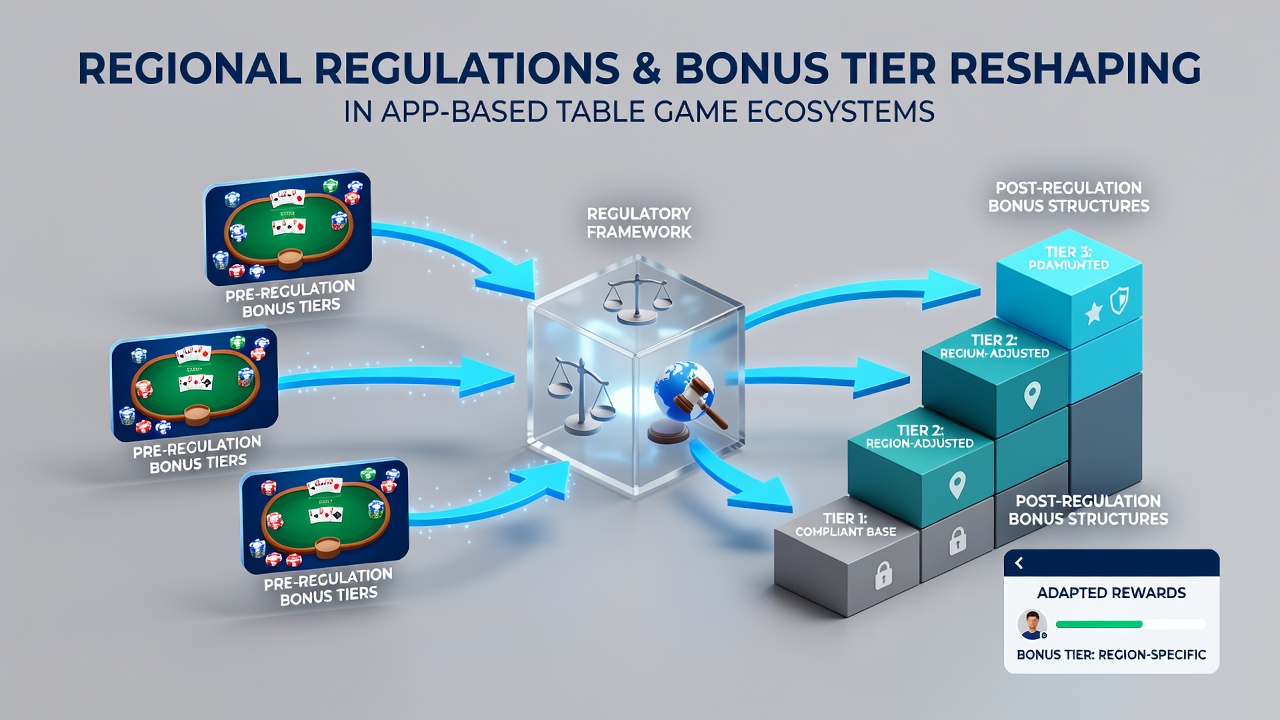
Regional licensing frameworks continue to influence how operators structure reward tiers for blackjack, roulette and other table games delivered through mobile applications, and data from multiple markets shows these adjustments affect everything from initial deposit matches to long-term loyalty multipliers. In July 2026 several European and North American jurisdictions implemented updated guidelines that cap promotional percentages while requiring extended playthrough periods before tier advancement becomes possible.
North American Licensing Adjustments
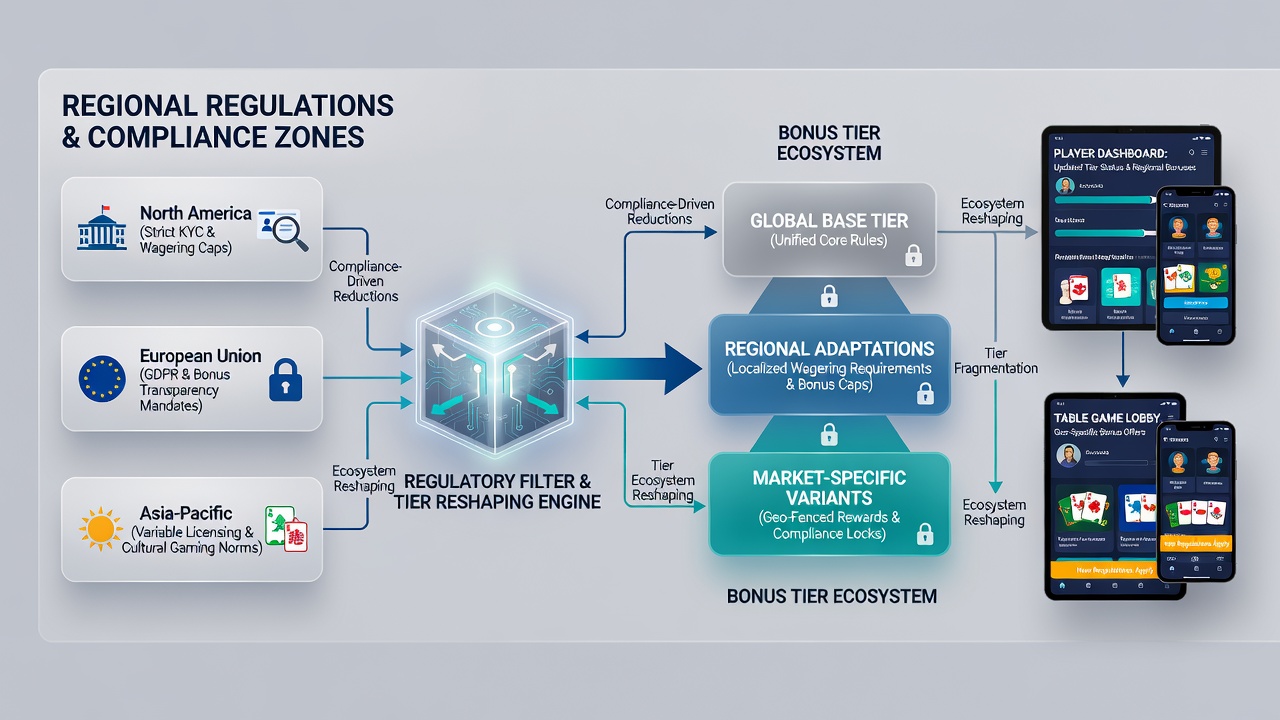
State-level regulators in the United States have introduced variable wagering thresholds that force operators to recalibrate progression speeds within app ecosystems, and these changes appear most pronounced in markets where table game revenue now exceeds slot contributions. Michigan's gaming control board, for instance, requires that any bonus credited to a mobile table game account must carry a minimum 15x playthrough when the title involves live dealer interaction, whereas earlier frameworks allowed 10x thresholds across all verticals. Operators responded by extending the time required to reach silver and gold tiers, effectively stretching the interval between reward unlocks by an average of 22 days according to aggregated compliance filings.
Canadian provincial frameworks produce parallel effects through centralized self-exclusion integration and deposit limit enforcement, which together compress the velocity at which players accumulate tier points. Ontario's iGaming market data indicates that after the introduction of BetGuard-linked verification, average monthly tier upgrades dropped 18 percent for table game users compared with the preceding quarter, prompting several platforms to introduce hybrid point systems that blend real-money wagers with responsible-play milestones.
European and Asia-Pacific Market Responses
Across the European Union, member states apply divergent interpretations of the 2023 remote gambling directive updates, resulting in bonus structures that differ sharply even between neighboring countries. Germany enforces a strict 1-euro maximum stake during bonus play for table games, which has led operators to segment their mobile loyalty ladders so that roulette and blackjack participants advance more slowly than slot users within the same application. In contrast, Malta's authority permits higher stake multipliers during promotional periods provided operators maintain separate ledgers for bonus and cash balances, and this flexibility has allowed some platforms to compress the path to platinum status by nearly 30 percent for high-volume table game participants.
Australian state regulators have focused on disclosure requirements rather than hard caps, yet the mandated display of effective return-to-player percentages within bonus terms has encouraged operators to lower initial tier rewards while increasing long-term cashback percentages. Figures released by the Australian Communications and Media Authority reveal that table game bonus redemption rates fell 14 percent in the first half of 2026, coinciding with clearer on-screen warnings about wagering requirements that now appear before each deposit.
Technical Implementation Patterns
Application developers have responded to these fragmented rules by building modular backend systems capable of loading jurisdiction-specific tier logic at runtime, and geofencing combined with device-level verification now determines which bonus schedule activates when a user opens a table game. One common architecture separates base-game progression from promotional progression, allowing operators to freeze tier advancement during periods when local rules prohibit certain reward mechanics. Industry reports indicate that such dual-ledger designs reduce compliance violations by 37 percent while preserving user engagement metrics across borders.
Payment method restrictions further complicate tier calculations because several regions prohibit the use of certain e-wallets for bonus funding, and operators must therefore route those transactions into separate tracking pools that advance at reduced rates. Data compiled by the European Gaming and Betting Association shows that players using restricted methods in regulated markets require an average of 47 percent more table game volume to reach the next loyalty level compared with users of approved banking channels.
Future Outlook and Compliance Monitoring
Regulators continue to refine reporting standards for mobile table game promotions, with several jurisdictions scheduled to require real-time API feeds that transmit tier status changes directly to oversight bodies. These enhanced monitoring capabilities are expected to standardize data formats across borders, potentially enabling operators to maintain unified loyalty engines that still comply with local constraints. Research conducted by the University of Nevada's gaming research center suggests that standardized reporting could reduce administrative overhead by 25 percent while maintaining the integrity of regional reward structures.
Conclusion
The interplay between regional regulations and app-based table game bonus tiers produces a constantly shifting landscape in which operators must balance player retention goals against compliance obligations. Jurisdictions that impose stricter playthrough multipliers or stake caps tend to lengthen the time required for tier advancement, whereas markets emphasizing disclosure and responsible-play integration often preserve faster progression paths through alternative reward mechanics. As July 2026 regulatory updates continue to roll out, the technical infrastructure supporting these systems grows more sophisticated, allowing platforms to deliver tailored experiences that remain aligned with each licensing authority's specific requirements.