Decoding Network Timing Variations That Alter Feature Unlocks in Portable Entertainment Platforms
Drew Bauer · Jul 15, 2026

Decoding Network Timing Variations That Alter Feature Unlocks in Portable Entertainment Platforms
Portable entertainment platforms such as smartphones and tablets rely on network connections to manage feature unlocks in apps for streaming, gaming, and interactive media, where timing variations often determine when users gain access to new content or capabilities. These variations stem from differences in signal propagation, server response intervals, and data packet routing across cellular and wireless infrastructures, creating inconsistencies that developers must account for during app design and deployment.
Core Mechanisms Behind Timing Dependencies
Feature unlocks in these platforms typically operate through timestamp verification processes that compare device clocks against centralized servers, and any deviation in network latency directly shifts the moment when an unlock command processes successfully. Mobile networks introduce delays ranging from milliseconds on optimized 5G connections to several seconds on congested 4G or Wi-Fi paths, which alters the sequence of events in time-sensitive applications where rewards or levels activate based on precise intervals. Researchers at institutions including those affiliated with the International Telecommunication Union have documented how jitter, defined as variation in packet arrival times, compounds these effects especially during peak usage periods when multiple devices compete for bandwidth.
Data from network monitoring studies show that even minor fluctuations in round-trip time can desynchronize unlock triggers, leading apps to either delay access or require repeated synchronization attempts. Developers address this by implementing buffer zones around expected timings, yet residual variations persist across different regions and carriers because infrastructure quality differs substantially between urban fiber-backed towers and rural relay stations.
Factors Influencing Network Timing Variations
Several technical elements contribute to timing inconsistencies, beginning with the physical layer of signal transmission where distance from cell towers and atmospheric conditions affect propagation speed. Handover events between network cells further introduce brief interruptions that reset pending server requests, while packet loss forces retransmissions that extend overall latency beyond initial projections. Observers note that software-level factors such as app background processes and operating system task scheduling interact with these network conditions to produce compounded delays during unlock sequences.
Geographic and regulatory differences also play roles, as spectrum allocation policies in various countries shape available bandwidth and thus influence how quickly timing data exchanges occur. In July 2026, updates to international 5G standards are scheduled to introduce refined synchronization protocols aimed at reducing these variances, according to announcements from standards bodies overseeing global telecommunications frameworks.
Observed Effects on User Feature Access Patterns
Studies tracking app behavior across diverse device populations reveal that users on variable-latency networks experience unlock events offset by intervals that range from fractions of a second to multiple minutes, depending on concurrent traffic loads. This manifests in streaming services where episode releases or bonus content appears later than advertised for some accounts, or in interactive media where progression gates remain closed until delayed confirmations arrive. Evidence from field measurements indicates higher incidence rates during evening hours when residential internet usage spikes and shared infrastructure reaches capacity limits.
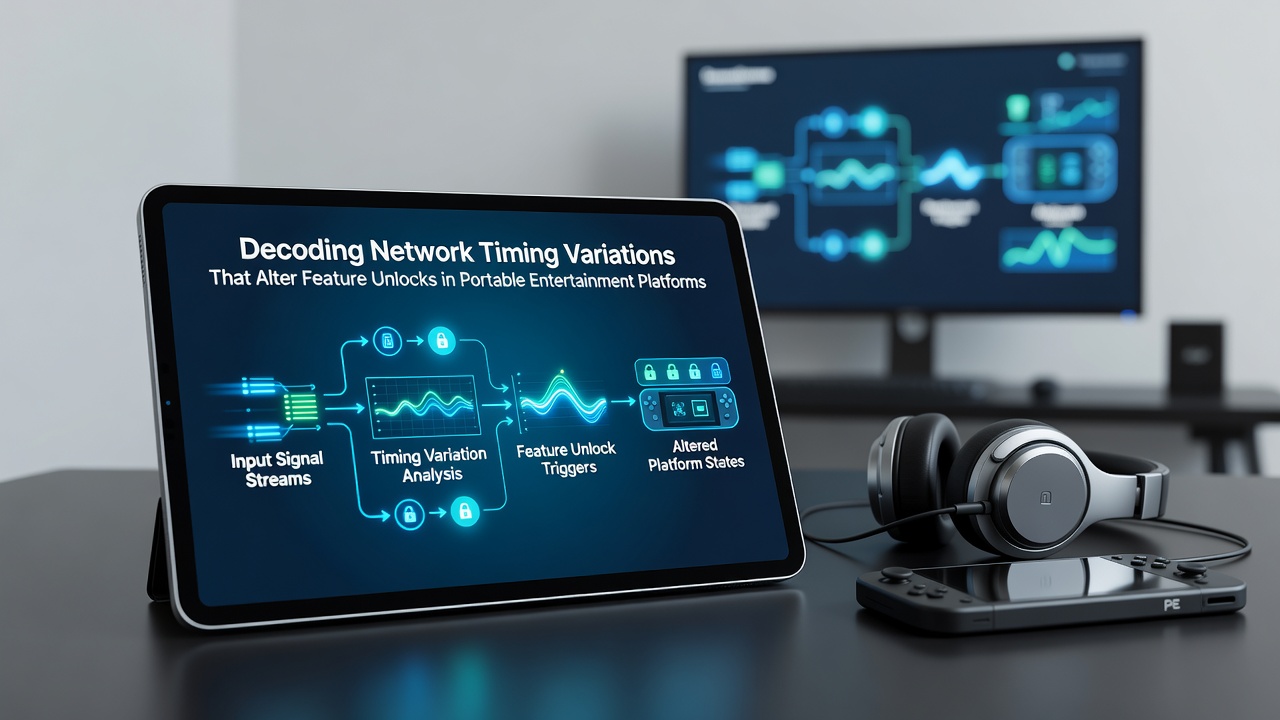
Those who have examined usage logs across multiple platforms find correlations between specific network types and unlock success rates, with fiber-connected Wi-Fi setups showing greater consistency compared to mobile data paths subject to signal fading. Regulatory reports from agencies such as the Australian Communications and Media Authority highlight how these patterns affect service reliability metrics that providers must report periodically.
Approaches to Measuring and Adjusting for Variations
Engineers employ diagnostic tools that log precise timestamps at each stage of the unlock workflow, allowing identification of bottlenecks introduced by particular network segments or routing paths. Adaptive algorithms then adjust expected response windows dynamically based on historical latency profiles collected from user devices, which reduces failed attempts without compromising security checks tied to time-based validation. Academic analyses from European research consortia demonstrate that combining client-side predictions with server-side adjustments yields measurable improvements in unlock consistency across tested populations.
Industry organizations focused on mobile application standards continue to refine best practices for handling timing dependencies, emphasizing the need for redundant verification methods that tolerate natural network fluctuations without exposing systems to exploitation risks.
Conclusion
Network timing variations represent a persistent technical challenge for portable entertainment platforms because they directly intersect with the mechanisms that control feature availability and user progression. Continued advancements in network infrastructure alongside refined software techniques offer pathways toward greater uniformity, while ongoing data collection from global sources supports targeted refinements in how developers architect time-dependent systems.