Audio Design Elements Shaping Claim Behaviors in Mobile Live Dealer Platforms
Zoe Lang · Aug 19, 2026
Audio Design Elements Shaping Claim Behaviors in Mobile Live Dealer Platforms
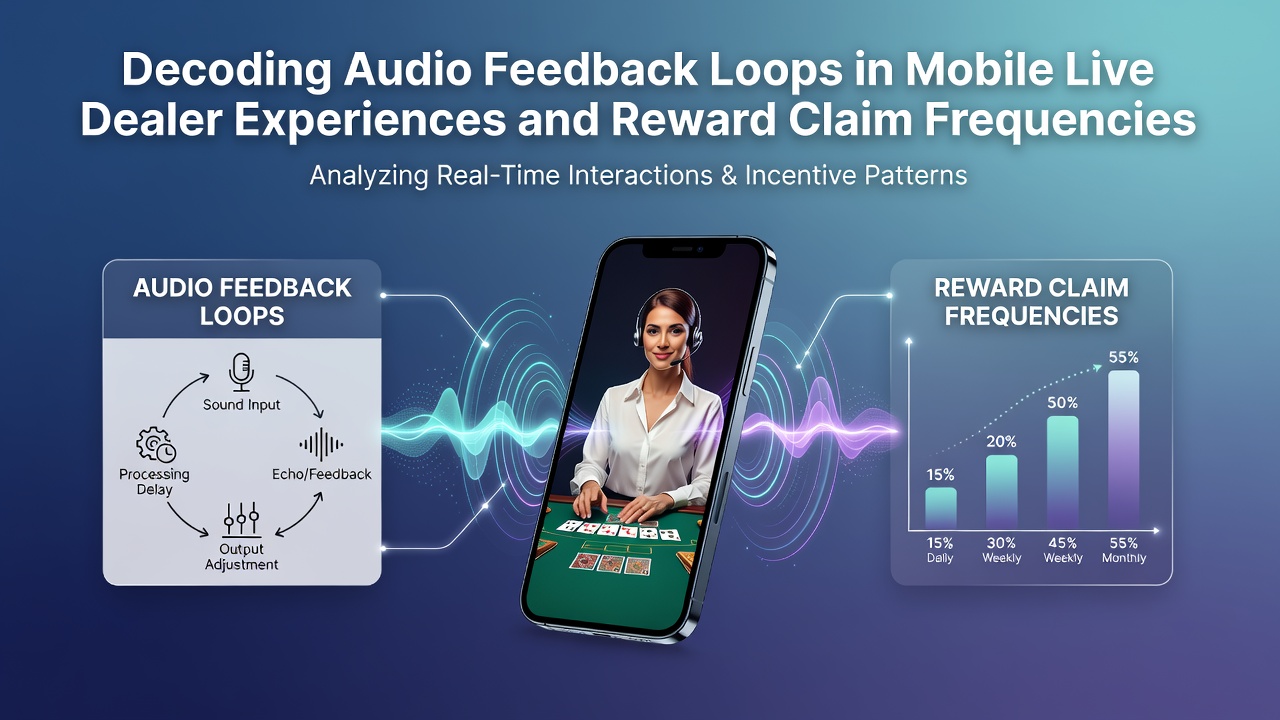
Audio feedback loops operate through repeated sound patterns that trigger after specific in-game events such as card reveals, wheel spins, or dealer announcements in mobile live dealer applications. These loops combine short tones, ambient casino sounds, and escalating chimes that repeat at intervals tied directly to user actions and system responses. Data from platform analytics in regulated markets show that sessions incorporating layered audio cues record higher rates of reward claims within the first ten minutes compared to silent or minimal-sound versions.
Mechanics of Feedback Loops in Live Dealer Mobile Sessions
Developers build these loops by mapping sound triggers to dealer interactions and bet outcomes, then layering them with reward notification tones that increase in frequency as play continues. A player who completes a hand might hear an immediate confirmation chime followed by a softer loop that builds until the next decision point, while reward claim prompts insert distinct alert sounds at timed intervals. Research conducted by independent testing labs indicates that such patterns align with established psychological response models where repeated auditory stimuli maintain attention without requiring visual focus on every element.
Platform operators in multiple jurisdictions track these interactions through session logs that log both sound exposure duration and subsequent reward redemptions. Figures from North American and European operators reveal that claim frequency rises when audio sequences include progressive pitch changes rather than static tones, because the variation prevents habituation. And because mobile devices route sound through earbuds or device speakers at varying volumes, engineers adjust loop intensity based on device sensor data to keep the feedback consistent across hardware types.
Connections Between Sound Patterns and Reward Redemption Rates
Studies examining thousands of user sessions across Australian and Singaporean licensed platforms demonstrate measurable correlations between specific audio loop structures and the timing of reward claims. Sessions featuring continuous low-level ambient loops paired with intermittent high-reward alerts show claim activity clustering around dealer announcements and bonus round starts. Those same studies note that removing the secondary alert layer reduces overall claim volume by measurable percentages within the same user cohorts.

Operators have begun testing variations where loop tempo adjusts dynamically according to session length and bet size history. One documented trial run in August 2026 across several Canadian provincial frameworks recorded a shift in claim timing when tempo increased after twenty minutes of continuous play, resulting in more frequent reward redemptions during later stages of each session. These adjustments rely on real-time data feeds that monitor both audio delivery and player response metrics without altering game rules or payout structures.
Technical Implementation Across Different Device Ecosystems
Mobile operating systems handle audio playback through distinct APIs that affect how loops maintain synchronization with live video feeds from dealer studios. Android and iOS implementations differ in latency handling, which requires separate calibration for each platform to prevent timing drift between sound cues and on-screen events. Engineers address this by embedding timestamp markers within the audio files themselves so that reward prompts align precisely with dealer actions regardless of network conditions.
Third-party testing firms such as those accredited by the Malta Gaming Authority have published reports detailing how audio compression settings influence perceived clarity on lower-bandwidth connections common in emerging markets. Their findings indicate that preserving certain frequency ranges in the feedback loops helps maintain the intended psychological effect even when overall audio quality drops. Those same reports highlight the use of adaptive bitrate streaming for sound files as a standard practice among larger operators.
Observational Data From Regulated Markets
Regulatory bodies in New Jersey and the Australian Capital Territory require operators to log interaction metrics that include audio exposure alongside reward claim events, creating datasets that researchers can analyze for pattern detection. Analysis of these datasets shows that players exposed to looped dealer voice overlays combined with mechanical sound effects claim rewards at intervals that correspond closely to the loop cycle lengths. The patterns hold across different game types including blackjack, roulette, and baccarat variants delivered through the same mobile applications.
Industry associations including the European Gaming and Betting Association have compiled comparative data from multiple operators that further separate the contribution of audio design from other interface elements such as button placement or color schemes. These compilations confirm that audio remains one measurable variable among several that together influence claim frequency without any single element acting in isolation.
Conclusion
Audio feedback loops in mobile live dealer environments function through precisely timed sound sequences that operators calibrate to align with both game events and reward notification systems. Data collected across licensed jurisdictions demonstrates consistent relationships between loop structure variations and the timing plus volume of reward claims. Technical adaptations for different devices and network conditions ensure these patterns remain effective, while regulatory reporting requirements continue to supply the raw metrics needed for further examination of these interactions.